

Photo Courtesy: space.com
I’ve always said that one of the best things about living in the 705 is the awe inspiring night sky. The famed Perseid meteor shower happens this week, but moonlight may make it difficult to view.
The Perseid meteor shower is one of the most prolific showers of the year, producing rich, bright streaks across the sky. The Perseids are active from mid-July until late August. This year, it will peak on the night of August 12th before dawn on Aug. 13th according to NASA. If you want to see the spectacle, start observing around 11 p.m. when the rates of shooting stars increase. If there’s a clear sky, the Perseids will have a meteor rate of about 100 visible ‘shooting stars’ per hour.
You may have noticed last night’s – and this morning’s – glowing moon. Unfortunately, the peak of the Perseids meteor shower occurs just three days after a full moon, so moonlight may wash out fainter meteors. Still, it’s worth trying to catch a glimpse of them before dawn.
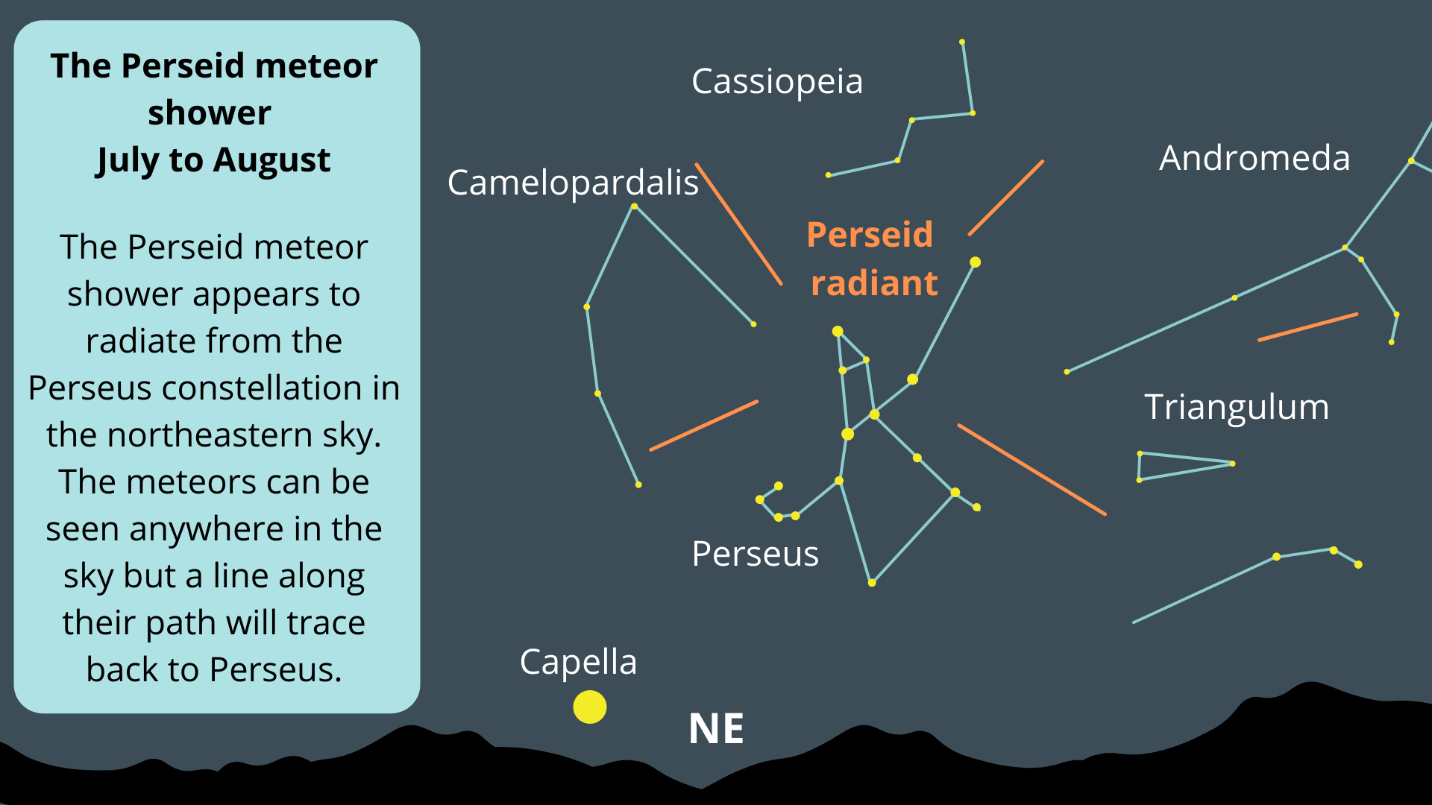
The Perseid meteor shower occurs each year as Earth travels through the trail of debris shed by comet 109P/Swift-Tuttle. These fragments – often no larger than a grain of sand – collide with Earth’s atmosphere at speeds of up to 59 kilometers per second. The resulting friction vaporizes the debris, creating the bright flashes that we see as the dramatic “shooting stars”. Some meteors can outshine even the brightest planets.
You’ll have another opportunity to view a meteor shower on October 20th-21st when the Orionids occur. At that time, a new moon will be coinciding with the peak — providing a dark sky and a better view.

